Tel \ WhatsApp
+1(626)866 1909
+86 185 2005 0589
+86 138 1119 0095

Author: Site Editor Publish Time: 2026-11-09 Origin: Site

Fragrance brands often view discovery sets as low-margin giveaways. They rarely treat them as strategic assets. However, these miniature collections actually serve as your most powerful customer acquisition tool. The initial unboxing experience directly correlates to brand loyalty. It determines whether a buyer converts from a tiny sample to a high-margin, full-size bottle. Balancing unit costs against structural integrity remains a constant headache for buyers. Fragile glass vials shatter easily when packaging tolerances slip. Furthermore, cheap materials instantly erode brand equity before the customer even sprays the scent. This guide provides procurement managers and brand owners a rigorous framework. You will learn how to evaluate material durability and shortlist capable vendors. We will explore methods to source a reliable packaging solution. You will also discover actionable strategies to navigate minimum order quantities and protect your bottom line.
Precision is Non-Negotiable: Vial-to-insert tolerance is the highest risk factor in sample packaging; rigorous drop-testing and prototyping are mandatory.
Material Dictates Margin: Balancing premium aesthetics (like wood or rigid board) against shipping dimensional weight (DIM) is critical for ROI.
MOQ Realities: Brands must align their customization demands with their volume capabilities, utilizing strategies like standardized structural boxes paired with custom sticker systems for lower-volume runs.
Vendor Auditing: True manufacturer capability is proven through die-line precision, material sourcing transparency, and quality control during assembly, not just portfolio photos.
Sample packaging sets baseline brand expectations. It communicates your brand identity before the fragrance is even sprayed. Customers judge the quality of the juice based on the box. Heavy, textured paperboard implies luxury and refinement. Flimsy folding cartons suggest a mass-market product. High perceived value justifies premium pricing for your discovery sets. You can charge more when the unboxing feels like a true gift. This tactile experience primes the buyer. It influences their emotional response to the scents inside.
Broken sample vials create severe hidden costs. You do not just pay for replacement glass and lost perfume. You permanently lose a potential high-value customer. A ruined package frustrates the buyer. Spilled oils also risk damaging other mail in transit. Delivery carriers often flag and destroy leaking packages. We see brands lose thousands in refunds due to poor internal protection. Strong packaging eliminates these logistical nightmares. It ensures your product arrives exactly as intended.
A smart packaging strategy allows rapid market testing. A standardized, scalable multi-slot perfume gift set box offers massive flexibility. Brands can easily swap out seasonal scents. You can launch localized collections without redesigning the entire outer package. You simply change the printed sleeve or internal layout. This modular approach saves significant capital. It drastically reduces development time for new product launches.
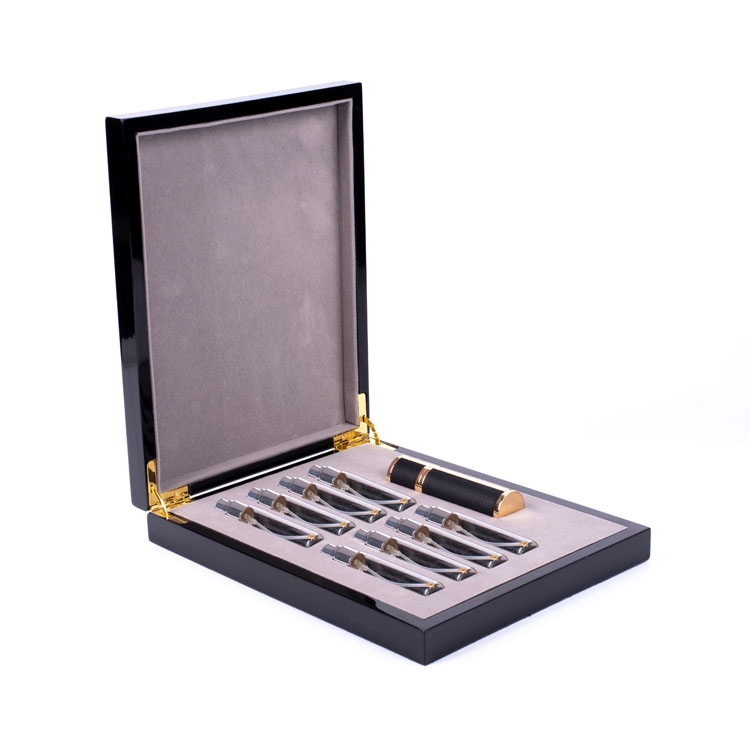
You must evaluate the necessity of perfume sample packaging with a fitted insert. The internal structure prevents motion during shipping. Glass vials must remain completely stationary. Various materials offer different levels of security and aesthetic appeal.
EVA Foam / High-Density Sponge: This material provides high security. It offers a premium feel and precise die-cutting capabilities. The foam grips the glass firmly. However, it carries a higher cost. It also presents a lower eco-friendly profile.
Molded Pulp / Bagasse: This option delivers an excellent sustainability narrative. It provides good protection against blunt impacts. Consumers appreciate the compostable nature. But it requires high upfront tooling costs.
Die-Cut Cardboard/Paperboard: Paper inserts are cost-effective and highly recyclable. They align well with modern eco-conscious branding. However, they carry a higher risk of vial rattling. Tolerances must be perfectly dialed in.
Material Type | Shock Absorption | Tooling Cost | Sustainability |
|---|---|---|---|
EVA Foam | Excellent | Low to Medium | Poor |
Molded Pulp | Good | High | Excellent |
Die-Cut Cardboard | Moderate | Low | Excellent |
Your chosen materials directly signal your market position. Rigid setup boxes remain the industry standard for luxury. They use thick greyboard cores wrapped in premium art paper. They are highly durable. They also accept custom finishes like hot foil or deep embossing.
The premium tier demands even heavier structures. You might consider a wooden perfume sample gift box for ultra-luxury extraits or VIP gifting. Wood commands absolute authority and permanence. However, you must account for specific risks. Wooden boxes cause significant increases in freight costs due to weight. They also carry humidity-related warping risks during ocean transit. You must mandate strict moisture control.
Alternative enclosures work well for budget-conscious lines. Eco-friendly drawstring pouches serve as viable secondary enclosures. They offer a minimalist aesthetic. Pouches cost less to produce and ship. They appeal to brands targeting a younger, casual demographic.
Emerging brands constantly fight the Minimum Order Quantity paradox. Custom tooling for unique inserts often requires MOQs of 3,000 to 5,000 units. Factories need high volumes to justify machine setup times. This pricing structure easily locks out smaller fragrance houses. High volume demands tie up crucial cash flow. You cannot always commit to massive production runs before testing market demand.
We recommend sourcing a standardized perfume discovery set box structure. You can then apply custom external branding. This circumvents high tooling fees. Utilize premium, highly textured sticker systems. You might also use custom printed belly bands or sliding sleeves. These elements achieve a bespoke look at sub-1,000 unit volumes. The underlying box remains off-the-shelf. Your custom artwork transforms it completely.
Design considerations dictate long-term flexibility. Plan your outer packaging dimensions carefully. Advise your design team to standardize the insert footprint. The outer box should remain uniform even if internal needs shift.
Define a universal outer box size (e.g., 150mm x 100mm).
Design interchangeable inserts for different slot counts.
Swap between a 3-slot, 5-slot, or 10-slot layout seamlessly.
This scalable strategy prevents wasteful redesigns. It lets you offer varying price points using one core packaging asset.
You must verify a B2B supplier’s actual production capabilities. Many online listings belong to trading companies. They act as middlemen and mark up prices. You want a direct factory relationship for better quality control. Request their ISO certifications immediately. Ask for recent factory audit reports. You should also demand a live video walk-through of the production floor. Watch their die-cutting and gluing stations in action.
Never proceed to mass production based on digital renderings. You must request a physical blank dummy first. Check the structural integrity and fold lines. Once approved, demand a fully printed prototype. Test this sample with your actual filled fragrance vials. Empty vials behave differently than liquid-filled ones. The added weight shifts the center of gravity. Drop test the loaded prototype repeatedly to confirm vial security.
Leaked alcohol poses a severe threat to packaging. Essential oils can degrade certain insert materials quickly. They often interact poorly with standard packaging adhesives. The glue dissolves, and the box falls apart. Ask your suppliers for data on glue degradation. Specify industrial adhesives meant for cosmetic applications. You must perform an accelerated aging test. Rub perfume on the insert to observe the chemical reaction.
Modern consumers demand transparent sustainability. Evaluate the factory's FSC-certified paper claims rigorously. Ask for the actual chain-of-custody certificates. Ensure RoHS compliance for all inks and foils used. Heavy metals in cheap inks violate international regulations. Your supplier must provide valid documentation for European and US retail compliance. Without this paperwork, customs might seize your shipment.
Tolerance precision separates amateur packaging from professional solutions. A simple 1mm sizing error in the insert ruins the product. Vials become impossible to extract if the hole is too tight. They rattle and shatter if the hole is too loose. You must require a ±0.5mm tolerance guarantee in your Service Level Agreement (SLA). Hold the factory financially accountable for structural deviations. Measure incoming batches with digital calipers.
Logistics costs can easily wipe out your margins. Many buyers over-engineer their boxes. They add unnecessary bulk for a premium feel. This pushes the package into the next shipping rate tier. Couriers charge by dimensional weight, not just dead weight. A slightly thicker box drastically eats into the profit margin of a $30 to $50 discovery set. Optimize your outer dimensions carefully. Consult your fulfillment partner before finalizing the design.
Complex packaging slows down your warehouse operations. An intricate box might look beautiful on a desk. However, it fails if it takes fulfillment center staff 3 minutes to assemble per unit. Compare this to a standardized box taking 30 seconds. Calculate the labor cost of box erection and insert loading. Complex folds require manual labor. Rigid boxes ship pre-assembled but take up warehouse space. Balance these operational constraints carefully during procurement.
A successful packaging strategy balances aesthetics, protection, and operational efficiency. You must prioritize insert tolerance to guarantee structural security. Match your chosen materials strictly to your target profit margins. Do not overspend on heavy wood if DIM weight destroys your ROI. Always audit your supplier’s prototyping and testing capabilities. True manufacturing partners welcome rigorous quality checks.
Your next step involves practical evaluation. Advise your procurement team to request blank structural samples from three to four shortlisted vendors. Conduct physical drop-tests with filled vials immediately. You must validate the physical engineering before discussing custom printing. Negotiate final terms only after the physical prototype survives your testing protocol.
A: Typically, fully bespoke rigid boxes with custom molded inserts start at 1,000 to 3,000 units. Factories require these minimums to cover die-cutting setup times. For quantities under 1,000, buyers should look for stock boxes paired with custom sleeves or high-quality labels.
A: High-density EVA foam offers the best shock absorption and tightest grip. It completely immobilizes the glass. However, die-cut cardboard is preferred for brands requiring 100% plastic-free or recyclable eco-claims, though it needs exact tolerances.
A: Prototyping takes 1-2 weeks. Mass production generally requires 15-30 days post-approval. Sea freight adds 30-45 days. This means brands should begin the procurement cycle at least 3 months before their scheduled product launch.
A: Yes, but it requires strict moisture-control during ocean transit, such as using desiccants. You must account for significantly higher shipping costs due to the material's weight. Phytosanitary certificates may also be required depending on the wood type and destination.
