Tel \ WhatsApp
+1(626)866 1909
+86 185 2005 0589

Author: Site Editor Publish Time: 2026-11-06 Origin: Site

The "Standard" 750 mL wine bottle is a familiar sight, but you should not assume it represents a single size. Most standard bottles measure between 3 inches and 3.3 inches in diameter. Their height typically falls between 11.5 inches and 12 inches. Deviations from these averages occur frequently across different wine regions.
Varietal nuances play a major role in packaging selection. A Pinot Noir bottle, often called a Burgundy bottle, features sloping shoulders and a wider base. These characteristics require a broader cavity than the straight-shouldered Cabernet Sauvignon, or Bordeaux bottle. If you force a wide Burgundy bottle into a slim Bordeaux box, the corners will likely create pressure points.
You must measure for fit by calculating the necessary "Internal Clearance." This space allows for easy insertion and removal of the bottle. We recommend at least 1/8 inch of clearance on all sides to prevent friction. Common mistakes include ignoring label thickness or the protrusion of the foil capsule. These details add extra millimeters that can turn a "perfect fit" into a tight, damaging squeeze.
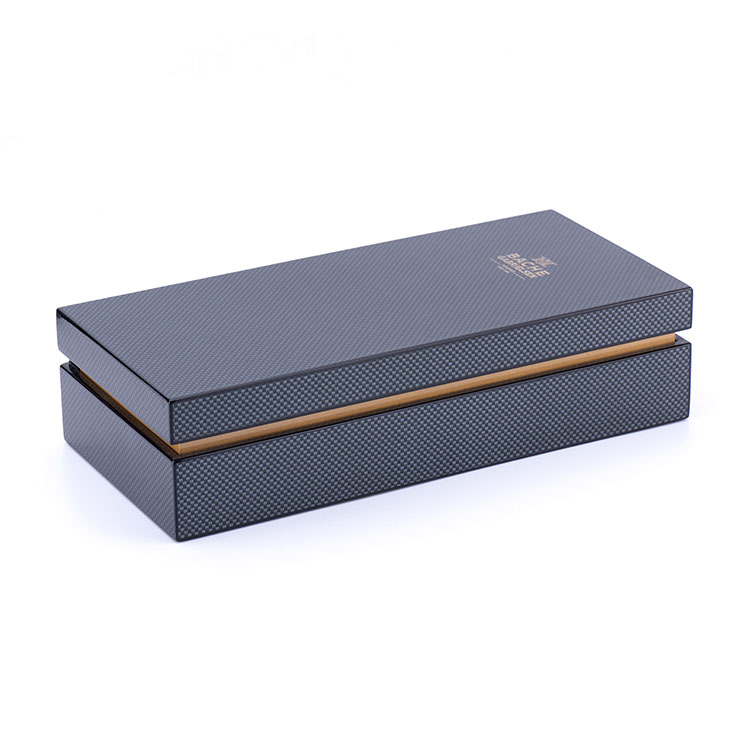
The 750 mL wooden wine gift box offers exceptional value for premium branding. Wood provides a tactile, high-end experience perfect for corporate gifting or limited-edition releases. It creates a sense of occasion that paperboard simply cannot replicate. However, keep in mind that wood lacks inherent shock absorption.
For high-value logistics, the wine gift box with a molded foam insert remains the gold standard. Foam secures the neck and the base, preventing the bottle from shifting during transit. It absorbs vibration, which is crucial for expensive vintage wines.
Materials behave differently under stress. Corrugated fiberboard is superior for logistics because it offers high crush resistance. Rigid paperboard or wood caters better to high-end shelf presentation. If you need to pack larger bottles, such as sparkling varieties, you must source a hinged champagne gift box. Champagne bottles are thicker and heavier, requiring robust, specialized structures to prevent breakage.
The following table outlines key attributes of different packaging materials for comparison:
Material Comparison Chart
| Packaging Type | Best Use Case | Primary Strength | Shock Protection |
|---|---|---|---|
| Corrugated Cardboard | E-commerce Shipping | Crush Resistance | High (with inserts) |
| Wooden Box | Luxury Gifting | Aesthetic Appeal | Low (requires internal padding) |
| Rigid Paperboard | Retail Shelf | Premium Branding | Moderate |
You should define your use case clearly before sourcing. Is your primary objective point-of-sale appeal or e-commerce protection? Retail environments prioritize branding and shelf presence. Transit environments demand structural integrity and vibration dampening. You may need different solutions for your website compared to your physical store.
Order volumes dictate your customization path. Small quantities often rely on stock packaging, which simplifies logistics but limits branding. Large volumes allow for custom-engineered solutions that fit your specific bottle dimensions perfectly. Precision-fit packaging reduces the need for secondary void fill.
Safety compliance is non-negotiable. You must understand basic transit testing protocols. A professional-grade insert does more than hold the bottle; it ensures the wine passes vibration tests conducted by common carriers. When evaluating sustainability, consider the life cycle of your chosen materials. While plastic-based foams are common, high-density paper-based inserts are increasingly effective for eco-conscious brands.
Tolerances define the success of your packaging rollout. We suggest a buffer zone between 1/8 and 1/4 inch. This provides the "sweet spot" for safety. It gives the bottle enough room to rest comfortably while preventing excessive movement. Without this space, temperature changes can cause air pressure buildup in the glass, leading to potential structural failure.
Weight considerations directly impact your bottom line. You must calculate the total shipping weight, including the bottle, the liquid, the packaging, and any outer shipping cartons. Carriers charge based on dimensional weight and actual mass. Optimization here saves significant shipping costs over thousands of units.
Assembly speed is often overlooked until the production line starts. Complex, multi-part boxes increase your labor costs significantly. You should evaluate how quickly a worker can assemble, insert, and seal the box. Simplicity in design usually correlates with lower labor overhead and fewer assembly errors.
Risk mitigation requires proactive testing. Never commit to a large production run without performing a "dummy" test. Fill the packaging with empty bottles and perform a controlled drop test. If the bottle survives a three-foot fall onto concrete, you have likely achieved a solid protective design.
Start by shortlisting suppliers who meet ISO quality standards. Verify their customization capabilities and confirm they understand the nuances of glass wine bottles. A good supplier should provide technical drawings or 3D renderings before production begins.
Requesting samples is essential. You need to touch and feel the materials to ensure they meet your brand standards. Test these samples with your actual product. If possible, perform a rigorous drop test with your specific bottle type, as weight distribution varies by varietal.
Finally, finalize your technical specifications. Create a document that defines the inner dimensions, material thickness, and structural requirements. Distribute this to your manufacturing partners to ensure consistent production quality across every shipment. Consistency keeps your brand reliable and minimizes the risk of damage during your busiest shipping seasons.
A: Typically, 3.5" x 3.5" x 13" is considered the safe minimum for a standard Bordeaux bottle. However, specific bottle shapes, such as wider Pinot Noir bottles, will require adjustments to the width. Always check your specific bottle dimensions before placing a large order.
A: Generally, no. Champagne bottles feature significantly wider bases and shoulders compared to standard wine bottles. You should specifically source a hinged champagne gift box or use adjustable packaging designed for higher pressure and larger diameters to prevent the box from crushing or tearing.
A: Not necessarily. While wood provides excellent compression strength, it lacks natural flexibility. To make a wooden box safe for shipping, you must use high-quality interior padding, such as custom foam or molded pulp, to prevent the bottle from rattling and breaking against the rigid frame.
A: Your bottle likely has too much internal clearance, or the insert is not shaped for your specific glass diameter. A custom-molded insert is the best solution, as it effectively locks both the base and the neck in place, eliminating unwanted movement during handling.
A: Foam offers superior shock absorption, making it the ideal choice for high-value or highly fragile bottles. Cardboard inserts are often sufficient for standard retail distribution, and they provide better recyclability for brands focused on environmental impact. Choose based on the fragility of your wine and your sustainability goals.
