Tel \ WhatsApp
+1(626)866 1909
+86 185 2005 0589

Author: Site Editor Publish Time: 2026-03-02 Origin: Site

Historically, the concept of luxury packaging was defined by excess. Heavy boards, multiple layers of unrecyclable laminates, and magnetic closures were the standard indicators of value. Conversely, sustainability was often associated with compromised aesthetics—brown, rough, and minimal. This tension is vanishing. Today, "eco-friendly" is no longer a niche preference for a few conscious buyers.
Sustainable packaging is not merely a compliance tick-box. It acts as a strategic asset that protects brand equity. It future-proofs businesses against upcoming legislation while meeting a new definition of premium: "Intention over Indulgence." In this guide, we explore how to navigate this shift profitably, ensuring your packaging strategy delivers on both ethics and aesthetics.
Material Innovation: New technologies (mycelium, advanced papers, mono-materials) allow for rigid packaging boxes that maintain high-end tactile quality without plastic reliance.
ROI Realities: While unit costs for bio-materials may be higher, Total Cost of Ownership (TCO) is often balanced by reduced logistics weight, avoided carbon taxes, and increased customer willingness to pay (1-3% premiums).
Digital Integration: The physical box is becoming a gateway to digital value (Digital Product Passports) rather than just a disposable container.
The transition toward sustainability in the luxury sector is no longer driven solely by corporate social responsibility (CSR) reports. It is now a hard-edged business imperative. Two massive forces are squeezing the traditional rigid box market: legislative hammers and evolving consumer wallets.
The regulatory landscape creates a dichotomy between "Greenhushing" and "Green Claims." Many brands, fearing scrutiny or accusations of greenwashing, choose silence—a phenomenon known as Greenhushing. However, the new regulations require transparency. Brands must substantiate their environmental claims with data. You can no longer vaguely label a box as "green." You must prove its recyclability and sourcing. This shift forces procurement teams to seek vendors who can provide Life Cycle Assessment (LCA) data rather than just marketing fluff.
Luxury consumers are voting with their purchasing power. Data indicates that approximately 50% of consumers are willing to pay a 1-3% premium for sustainable options. While this percentage seems modest, in the high-margin luxury sector, it represents significant revenue retention. More importantly, it signals a redefinition of what "premium" feels like.
The old code of luxury was "heavy and glossy." The new code is "smart and story-driven." A consumer unboxing a high-end watch today is less impressed by a heavy, plastic-coated box that they feel guilty throwing away. They are more impressed by intelligent engineering—a box that uses zero plastic, tells a story of material origin, and respects the planet. We are witnessing a move from conspicuous waste to conspicuous responsibility.
Despite the push for reduction, the market for luxury rigid boxes is expanding, not shrinking.
Sustainability acts as the primary lever for two distinct growth strategies:
Retaining Share in Mature Markets (Europe/North America): Here, compliance and brand ethics prevent customers from defecting to "cleaner" competitors.
Capturing Growth in Emerging Markets (APAC): As the middle class expands in China and Southeast Asia, younger consumers are bypassing the "industrial luxury" phase and adopting "eco-luxury" values immediately.
The holy grail of packaging engineering is removing plastic without removing the premium feel. Historically, plastic provided rigidity, water resistance, and smooth finishes. Today, material science offers alternatives that outperform plastic in environmental impact while matching its functional properties.
The single biggest hurdle in recycling luxury packaging is mixed materials. A traditional jewelry box is a nightmare for a recycling facility: a cardboard core, wrapped in plastic-laminated paper, fitted with a foam insert, and snapped shut with hidden magnets. Because these layers cannot be easily separated by consumers or machines, the entire unit ends up in a landfill.
The solution lies in Sustainable Packaging designed with mono-materiality principles. This involves creating a box where the outer wrap, the inner board, and the interior tray are all made from 100% paper or fiber. When the box reaches the end of its life, the consumer can place the entire unit into a single paper recycling bin without disassembly. Brands achieving this simplify the consumer experience and align perfectly with circular economy goals.
Inserts and protective foams are often the last strongholds of plastic in luxury boxes. Brands are now turning to biology for solutions.
Mycelium & Seaweed: Fungi (mycelium) can be grown into custom molds to replace polystyrene foam. It offers a unique, velvety texture that feels incredibly premium—often described as "silky" or "soft-touch"—without a drop of petrochemicals. Seaweed-based films are also emerging as transparent window alternatives that dissolve in water.
Advanced Papers: High-density molded pulp has evolved far beyond the rough "egg carton" aesthetic. Modern thermoformed pulp can be smooth, colored, and precise enough to snap-fit a perfume bottle, providing the rigidity of plastic with the compostability of paper.
Innovation isn't limited to materials; it extends to the machinery that builds the box. Two key technological advancements are changing the game:
Glue Reduction: Traditional rigid box manufacturing consumes vast amounts of adhesive. New specific rigid box machinery utilizes precise nozzle systems and smart bonding techniques to reduce glue usage by up to 80%. This not only lowers the chemical footprint but also makes the recycling process of the pulp cleaner.
Moldless Technology: For limited runs, such as VIP kits or capsule collections, creating physical molds is wasteful and expensive. Digital cutting and creasing tables allow for on-demand production. This eliminates the need for tooling inventory and drastically reduces waste from obsolete stock.
A common misconception among creative directors is that sustainable materials restrict artistic freedom. In reality, the constraints of sustainability often drive deeper creativity. The goal is to evaluate design through the lens of impact, proving that you can have Luxury Packaging that looks stunning and treads lightly.
Luxury is tactile. The hand-feel of a box communicates quality before the lid is even opened. Traditionally, this was achieved with "soft-touch" plastic laminates. The modern approach uses natural dry embossing and water-based coatings. High-quality paper stocks with long fibers can be deeply embossed to create texture and depth without adding a non-recyclable film layer.
Designers are also leveraging micro-embossing to replace heavy ink coverage. Instead of flooding a box with metallic ink (which can contaminate recycling streams), brands use light diffraction through micro-embossed patterns to create a shimmering effect directly on the paper surface. This technique creates a premium visual that invites touch while remaining fully pulpable.
The era of the "Russian Doll" unboxing—where a box is inside a box inside another box—is ending. Structural minimalism focuses on "right-sizing" the packaging box. If a product is small, the box should be compact. This reduces the volume of air being shipped globally, which directly lowers the carbon footprint of logistics.
Collapsible rigid box designs are another breakthrough. These boxes ship flat to the fulfillment center and are assembled only when needed. This can reduce storage space requirements and shipping volume by up to 70%, offering massive cost and carbon savings before the product even reaches the customer.
One of the most effective ways to mitigate the environmental impact of a rigid box is to ensure it never enters the waste stream at all. The "Keepsake" model involves designing packaging intended for secondary utility. The box is not just a vessel; it is a product in itself.
| Standard Box Function | Keepsake Design Strategy | Brand Benefit |
|---|---|---|
| Jewelry Container | Converts into a travel jewelry case with secure compartments. | Extends brand visibility during customer travel. |
| Shoe Box | Designed as a stackable, drawer-style permanent closet organizer. | Becomes a permanent fixture in the customer's home. |
| Perfume Box | Structurally reinforced to serve as a trinket or stationery holder. | Daily interaction with brand assets on the vanity or desk. |
As we reduce physical material, we can augment value through digital integration. The physical packaging acts as a bridge to a digital experience, offering unlimited depth without adding weight.
The "unboxing" phenomenon on social media drives millions of views. However, viewers are increasingly critical of excessive waste in these videos. Brands must balance the "Instagrammable" spectacle with waste reduction. Augmented Reality (AR) offers a solution. An AR trigger on the box can launch a dazzling visual display on the user's phone—floating elements, brand stories, or immersive environments—providing the "wow factor" that excess tissue paper and ribbons used to provide, but with zero physical waste.
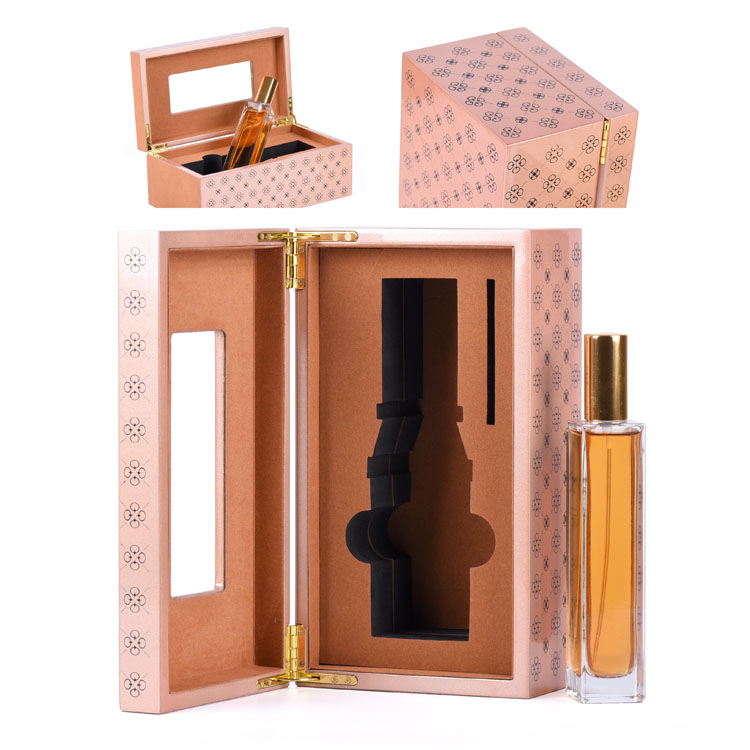
Switching to Eco-friendly Packaging often raises concerns about cost. Procurement teams need a framework to evaluate the financial reality beyond the simple unit price.
If you look only at the Bill of Materials (BOM), sustainable options like bio-foams or FSC-certified heavy boards may appear 10-20% more expensive than standard options. However, a Total Cost of Ownership (TCO) analysis reveals a different picture.
Direct Costs: Yes, the raw material cost is higher.
Indirect Savings: Lighter, right-sized packaging reduces air freight and last-mile delivery costs significantly. Mono-material designs reduce SKU complexity and assembly time.
Risk Avoidance: Compliance avoids potential fines from EPR schemes and non-compliance penalties in the EU market.
When these factors are weighed, the "premium" for sustainability often neutralizes or even flips into a cost saving.
A critical challenge is scalability. Can a vendor producing mycelium inserts supply 500,000 units for a global holiday launch? Procurement leaders must evaluate vendor capacity rigorously. They must also manage expectations regarding the consistency of "natural" materials. Non-bleached, recycled substrates may have slight color variances or flecks. This should be framed not as a defect, but as a hallmark of authenticity.
Selecting the right partner is crucial. Your criteria should move beyond price and lead time to include:
Certifications: Require FSC (Forest Stewardship Council), PEFC, or Cradle-to-Cradle certifications to verify raw material claims.
Transparency: Vendors must be willing to provide granular Life Cycle Assessment (LCA) data for the specific structure proposed. If a vendor cannot tell you the carbon impact of their box versus a plastic alternative, they are not ready for the modern luxury market.
Sustainable luxury packaging represents the convergence of ethics, aesthetics, and economics. It resolves the historical tension between creativity and impact, proving that responsibility does not require a sacrifice in beauty. For brand leaders, the path forward is clear. We must move beyond "Greenwashing" and commit to evidence-based packaging strategies.
As immediate next steps, encourage your stakeholders to audit your current packaging portfolio against the "4Rs" framework:
Reduce: Can the box be smaller or lighter?
Reuse: Can the design serve a secondary purpose?
Recycle: Is it mono-material and easily separable?
Recover: Are we using materials that support the circular economy?
By answering these questions, you turn a regulatory burden into a competitive advantage, securing your license to operate in the future of luxury.
A: It transforms the experience from "indulgent waste" to "intelligent design." While you may lose the layers of plastic wrap, you gain tactile richness through textured papers and high-quality embossing. Furthermore, integrating digital elements like QR codes or AR can add a layer of storytelling and exclusivity that physical materials cannot match, maintaining the premium feel while respecting consumer values.
A: On a per-unit basis, bio-materials can be higher. However, when analyzing Total Cost of Ownership (TCO), costs often balance out. Savings come from reduced shipping weight, lower logistics costs due to collapsible designs, and the avoidance of regulatory fines or carbon taxes. Additionally, the ability to charge a premium for sustainable products can offset material costs.
A: There is no single "best" material, but FSC-certified paper and board are the gold standard for rigid structures due to high recycling rates. For inserts, mycelium (mushroom root) is rapidly becoming the top choice to replace plastic foam. The most sustainable approach is usually a mono-material design where the entire package is made from fiber, simplifying the recycling process.
A: Yes. The key is removing mixed materials. By eliminating magnetic closures, plastic laminations, and foam inserts—replacing them with friction fits, water-based coatings, and paper pulp trays—a luxury box can be 100% recyclable. Brands are increasingly adopting these mono-material strategies to ensure their packaging enters the circular economy rather than the landfill.
