Tel \ WhatsApp
+1(626)866 1909
+86 185 2005 0589

Author: Site Editor Publish Time: 2026-08-16 Origin: Site

Shift the paradigm from viewing packaging as a logistical afterthought to treating it as a strategic brand asset. Every time a customer opens a new purchase, they form an instant judgment. Their initial tactile interaction sets the tone for product quality.
The Business of Fashion (BoF) highlights a vital reality. For jewelry brands, packaging serves as the only marketing material boasting a 100% open rate. The right casing justifies premium pricing. It significantly reduces return rates. It also actively drives repeat purchases. When buyers feel valued by the presentation, their brand loyalty deepens.
This guide breaks down the true return on investment behind these critical assets. You will discover a robust framework for evaluating materials. We will also outline the essential criteria for shortlisting reliable packaging partners. Mastering these elements ensures your brand delivers exceptional value from the very first touch.
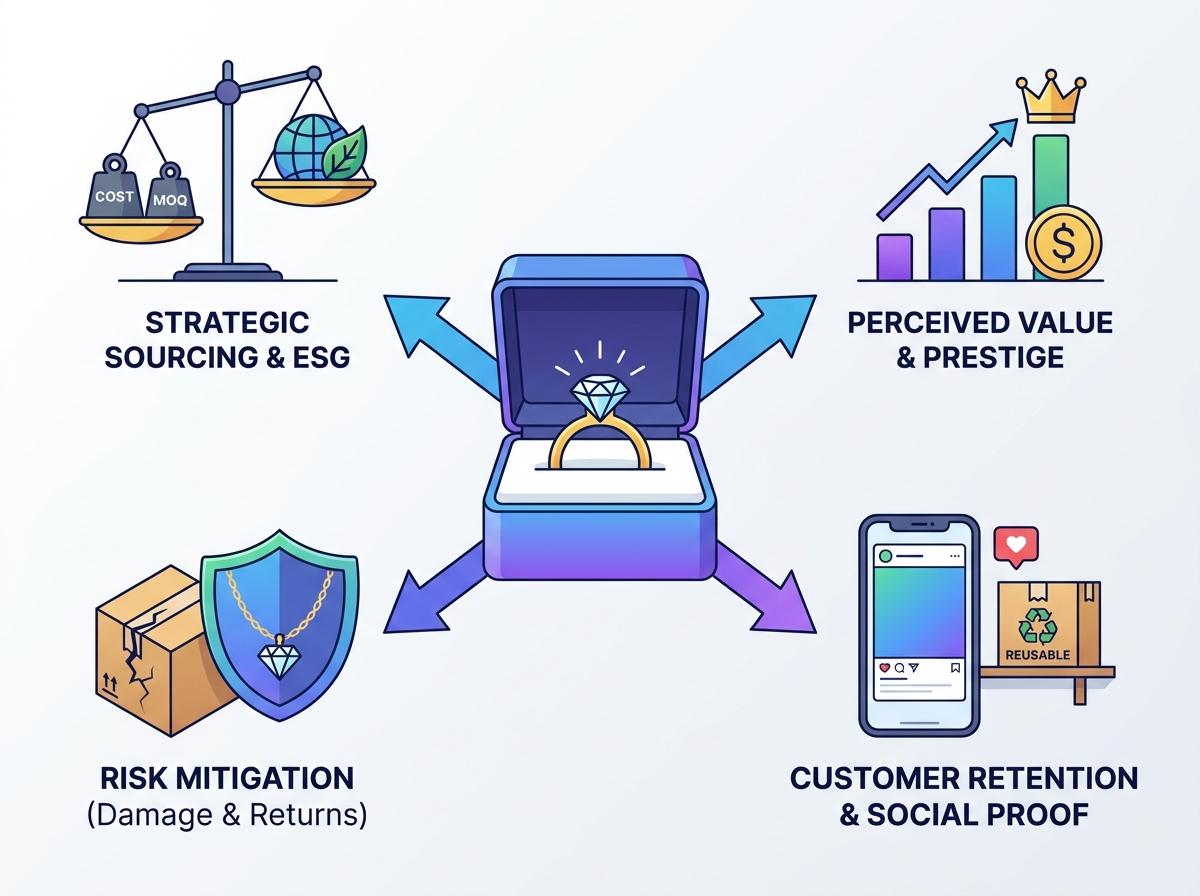
Perceived Value: A well-engineered jewelry packaging box directly correlates with the customer’s perception of the product’s financial worth and brand prestige.
Risk Mitigation: Purpose-built structural integrity and specialized inserts (e.g., anti-tarnish) drastically reduce transit damage and costly returns.
Customer Retention: High-quality boxes are rarely discarded; they are repurposed, creating permanent in-home brand visibility.
Strategic Sourcing: Vendor selection must balance unit cost with Minimum Order Quantities (MOQs), lead times, and ESG compliance.
Tactile feedback shapes customer perception immediately. Weight, texture, and the opening mechanism matter immensely. A solid hinge or a weighted base validates high-ticket purchases. It instantly prevents buyer's remorse. When customers unbox a luxury item, the physical resistance of a well-crafted lid signals exceptional quality. You communicate brand authority before they even see the jewelry. Smooth matte finishes and debossed logos amplify this effect. A flimsy box, conversely, undermines even the most exquisite gemstone. Brands must engineer the unboxing stage to match the price point of the enclosed piece.
Customers rarely discard high-end boxes. They keep them for daily storage or travel. Building for longevity creates a zero-CAC (Customer Acquisition Cost) brand touchpoint. Your brand remains active in their daily routine. When users place your sturdy box on their dresser, they interact with your logo every single morning. This repetitive exposure builds deep subconscious loyalty. You transform a simple container into a functional piece of furniture. Designing boxes holding multiple ring slots or hidden compartments encourages this retention. Treat the box as a secondary product offering.
Beautiful unboxing experiences directly fuel organic sharing. User-generated content (UGC) drives massive brand awareness. A visually stunning Jewelry Packaging Box lowers your overall marketing costs. Customers eagerly film the reveal process for social media platforms. They want to showcase the luxurious aesthetic to their followers. Intricate ribbons, custom tissue paper, and satisfying magnetic closures make videos engaging. This organic reach acts as a powerful social proof engine. Peer validation through UGC converts new buyers faster than traditional paid advertisements.
Delicate chains and intricate gemstone settings require serious protection. Crush-resistant outer layers prevent transit damage effectively. Shock-absorbing interiors keep precious pieces completely secure. You must evaluate the physical stress packages endure during shipping. Conveyor belts and rough handling easily bend fragile metals. High-density EVA foam or custom-molded inserts lock rings and necklaces in place. This prevents tangled chains and loose stones. Investing in robust structural integrity upfront saves thousands in replacement costs. It also protects your brand reputation from angry customer reviews.
Metal oxidation ruins valuable inventory rapidly. You must use specialized, sulfur-free, and anti-tarnish fabrics. These materials protect jewelry during warehouse storage and transit. Standard paper and glue often contain hidden acids. These acids react poorly when touching silver or low-karat gold over time. Sourcing chemically neutral interiors prevents sudden tarnishing. Moisture-wicking micro-fiber pouches offer an additional defense layer. You should mandate rigorous chemical testing from your suppliers. This proactive step guarantees products arrive pristine and gleaming.
High-value logistics carry constant theft risks. You must balance branded unboxing experiences against discreet outer shipping layers. Flashy logos on external mailers invite unwanted attention from porch pirates. Secure logistics demand plain, unbranded corrugated outer shells. Inside, you can still deliver a lavish, fully branded reveal. Incorporating tamper-evident tape provides peace of mind. Customers know instantly if someone compromised their package. This dual-layered approach mitigates theft while preserving the exciting presentation.
Selecting the right material determines both cost margins and brand perception. You must weigh upfront expenses against the long-term impact on the consumer. Different collections often require different material strategies.
Packaging Material Evaluation Matrix
Material Type | Pros | Cons | Ideal Use Case |
|---|---|---|---|
Rigid Cardboard | Highly scalable, lightweight, excellent for complex printing. | Lower perceived luxury compared to wood or leather. | Fashion jewelry, high-volume e-commerce sales. |
Wood & Faux Leather | Maximum perceived value, high durability. | High upfront cost, heavier shipping weight. | Fine jewelry, engagement rings, heirloom pieces. |
Velvet/Microfiber | Traditional luxury feel, soft protection. | Requires careful vendor vetting to avoid shedding. | Classic collections, delicate gemstone items. |
The operational impact of standardizing box sizes is profound. Standardizing sizes across rings, necklaces, and bracelets saves significant money. It optimizes warehouse space and streamlines fulfillment lines. Customizing every single SKU creates logistical bottlenecks. Workers spend too much time hunting for specific boxes. Instead, limit your catalog to three or four universal outer dimensions. You can maintain a customized feel through localized branding and tailored interior fittings. This approach heavily reduces inventory complexity.
Modularity offers the smartest path to scale. Use interchangeable inserts within a uniform outer box. Pads, pouches, and slots fit securely inside the standard shell. You scale efficiently without over-ordering specific SKUs. If a certain bracelet style sells out, you simply swap the bracelet insert for a necklace pad. The outer box inventory remains usable. This drastically cuts down on dead stock sitting in warehouses. It provides ultimate flexibility during sudden seasonal demand spikes.
Modern consumers demand sustainability loudly. Yet they still expect a premium, weighty feel. You face a tough dilemma balancing these expectations. Avoid non-recyclable plastics. Skip toxic adhesives entirely. Historically, luxury meant heavy plastics wrapped in synthetic velvet. Today, true luxury requires ethical sourcing. You can achieve high-end aesthetics using compressed recycled paper boards. Water-based glues eliminate harmful off-gassing. Embossing techniques add texture without using metallic foils.
Greenwashing damages brand trust permanently. You must verify your vendor's environmental claims. Look for FSC-certified papers rigorously. Demand soy-based or water-based inks for all printing. Check recycled content documentation thoroughly. Consumers easily spot fake eco-friendly promises. Partnering with certified suppliers protects your reputation. Request actual certificates of compliance before signing contracts. Transparent sourcing policies appeal strongly to younger demographics. They frequently base purchasing decisions on a brand's verified environmental footprint.
Design primarily for monomaterial recyclability. Customers should recycle the whole box without separating foam from paper. Mixed materials usually end up in landfills. If you use paper, ensure the inserts are also molded pulp. Alternatively, design for explicit reusability. Build durable containers meant for lifelong jewelry storage. Add clear instructions detailing how to upcycle the packaging. When a product lifecycle ends cleanly, it reinforces a positive brand narrative.
You must assess a vendor's true ability to handle scale. Do they offer rapid prototyping? You need to move from CAD designs to a physical sample quickly. Request a virtual walkthrough of their factory floor. Check their automated machinery levels. A partner relying entirely on manual labor will struggle during peak holiday seasons. They should possess in-house die-cutting and printing capabilities. Fragmented supply chains cause severe delays. A fully integrated manufacturer guarantees better speed to market.
MOQs and unit costs share a strict inverse relationship. High volumes drive unit costs down. However, you must factor in hidden expenses. Account for tooling fees upfront. Calculate die-cut charges carefully. Remember to figure in shipping volumetric weight. A beautifully large box might cost pennies to make but dollars to ship. Always request a landed cost estimate. This includes manufacturing, freight, and customs duties.
Follow these steps to protect your budget:
Request detailed quotes based on three different volume tiers.
Ask for a breakdown of all one-time tooling and mold fees.
Calculate the exact dimensional weight for domestic carrier shipping.
Negotiate payment terms aligning with your cash flow cycle.
Set strict operational standards immediately. Establish acceptable defect rates (AQL) in your contract. Ensure color-matching consistency is flawless. Demand Pantone fidelity across multiple production runs. A faded logo ruins the unboxing experience. Require pre-shipment inspections for every batch. Small deviations in hinge alignment or glue application compound over thousands of units. A reliable partner welcomes rigorous quality control protocols. They will openly share their internal testing procedures.
The presentation casing is never just a line-item expense. It represents a critical component of the actual product itself. Investing in structural integrity, sustainable materials, and modular designs directly impacts your bottom line. It elevates perceived value and builds long-term customer loyalty.
Take proactive steps today to refine your strategy.
Audit your current return rates to identify packaging-related transit damages.
Assess recent customer unboxing feedback from social media and reviews.
Consolidate your box sizes to improve warehouse modularity and streamline shipping.
Request structural samples from two or three vetted manufacturers before committing to any bulk orders.
A: Dimensional weight (DIM) plays a major role. Premium boxes are heavier and larger, which increases shipping fees slightly. However, this cost is typically offset. You will see a sharp reduction in transit damage and returns. Better presentation also justifies higher product margins, absorbing the extra freight easily.
A: Stock boxes with hot-stamping offer lower MOQs and faster lead times. They are ideal for testing concepts. Custom structural packaging requires higher capital upfront. However, it provides a distinct competitive moat and ensures an exact product fit, elevating the brand.
A: Anti-tarnish boxes use specific, chemically neutral papers and fabrics. These interior materials do not contain sulfur or acid. They also feature tightly sealed closures. This combination limits airborne moisture exposure, effectively preventing oxidation and discoloration on precious metals during storage.
