Tel \ WhatsApp
+1(626)866 1909
+86 185 2005 0589

Author: Site Editor Publish Time: 2026-07-10 Origin: Site

Securing the perfect Tea Packaging Box goes far beyond approving a colorful graphic design. You must carefully balance striking retail aesthetics against rigid functional performance standards. Tea leaves are exceptionally sensitive agricultural products. They deteriorate rapidly when exposed to environmental elements. The outer packaging serves as a critical defense line blocking moisture, harsh UV light, and oxygen. When brands overlook these structural requirements, they risk rapid flavor loss, shortened shelf life, and severely reduced profit margins.
This comprehensive guide breaks down the essential materials, functional barriers, and compliance standards needed to launch a successful product. You will discover how different finishes impact perceived value. We explore why specific printing methods suit different production scales. Finally, we offer an actionable framework. This helps you evaluate potential manufacturing partners and prevent costly mass-production errors.
Functional Barriers Come First: A successful tea packaging box must integrate airtight, food-safe inner linings (like foil or high-barrier bioplastics) to prevent flavor degradation.
Material Choice Dictates Scalability: Selecting between SBS paperboard, Kraft, or rigid board impacts both minimum order quantities (MOQs) and shipping weight.
Finishes Drive Perceived Value: Strategic use of tactile elements (embossing, spot UV) can justify premium retail pricing, provided they align with production budgets.
Compliance is Non-Negotiable: Sustainable materials and FDA-compliant inks must be verifiable to meet modern retailer and consumer standards.
Choosing the right material forms the foundation of any successful packaging project. You must select a substrate supporting structural integrity during transit. At the same time, it must align perfectly with your target retail price. Different materials offer distinct advantages regarding printability, durability, and consumer perception. When developing a new Tea Packaging Box, material selection directly influences your logistics costs and minimum order quantities.
Folding Cartons (SBS Paperboard): Solid Bleached Sulfate (SBS) represents the industry standard. It proves highly scalable and incredibly cost-effective for mass retail. Its smooth, clay-coated surface offers superior color reproduction for vibrant branding.
Kraft Paper: Unbleached Kraft paper immediately communicates organic and artisanal brand values. However, it requires specific ink considerations. The material features high absorbency, which often causes standard inks to appear muted or dull.
Rigid Boxes (Setup Boxes): These boxes deliver maximum durability and a premium unboxing experience. They wrap high-density chipboard in custom printed paper. They suit luxury or gifting lines perfectly. Be aware, they entail higher shipping volumes and larger minimum order requirements.
Under-specifying paper weight creates severe downstream problems. Grams per Square Meter (GSM) measures paper thickness. Using a low GSM for a heavy volume of tea can lead to box crushing. This often happens during warehouse palletization or standard retail shelving. Always request physical samples. Test them under actual transit conditions before approving mass production.
Material Comparison Chart
Material Type | Ideal Brand Positioning | Print Quality | Cost Level |
|---|---|---|---|
SBS Paperboard | Mass Retail / Supermarket | Excellent (Vibrant Colors) | Low to Medium |
Kraft Paper | Organic / Artisanal | Moderate (Muted Tones) | Low to Medium |
Rigid Box | Luxury / Gift Sets | Excellent (Premium Finishes) | High |
Tea leaves remain highly sensitive to external environmental factors. An outer paperboard layer provides structural support. However, it cannot block microscopic environmental threats alone. The outer box must work in tandem with inner protective layers. This combination ensures the tea reaches the consumer exactly as the master blender intended.
Moisture and Oxygen Resistance: Humidity introduces mold. Oxygen destroys delicate flavor profiles. You must integrate inner foil pouches, metalized films, or PLA-lined bags. These materials prevent staleness and maintain crisp freshness.
Light Protection: Ultraviolet light quickly degrades essential tea oils. If your inner packaging is transparent, avoid large die-cut windows on the outer box. Keep light exposure to an absolute minimum to preserve aroma.
Odor Isolation: Tea acts like a sponge for ambient smells. Food-grade, low-migration inks and adhesives are mandatory. They prevent the tea from absorbing chemical odors directly from the packaging materials.
You must balance your required shelf life against production costs. A product aiming for a six-month shelf life might perform well using a standard PLA bioplastic pouch. Conversely, a premium matcha requiring a 24-month shelf life demands a high-barrier aluminum foil layer. Always match your barrier investment to your specific retail turnover expectations.
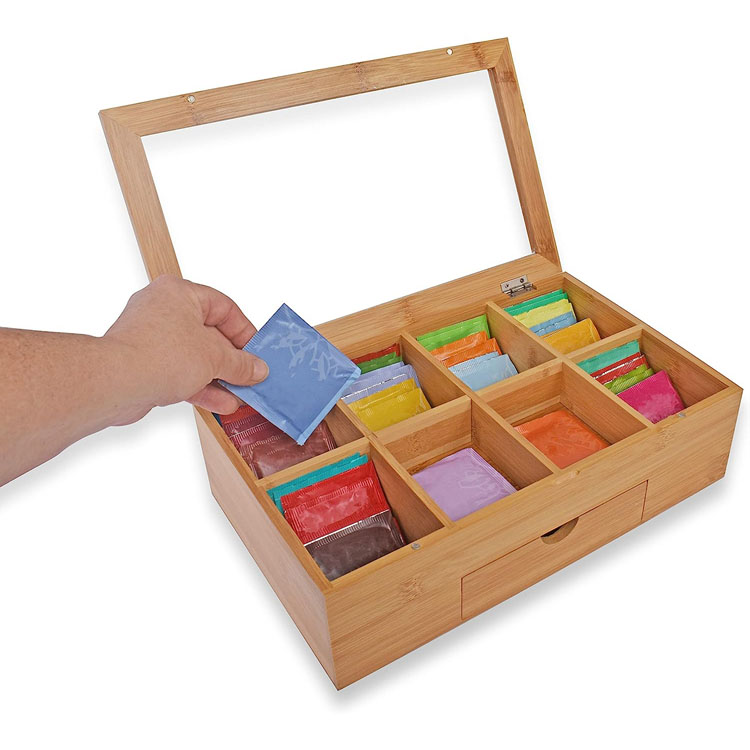
Your graphic design holds little value if a printer cannot replicate it accurately. Success depends on achieving exact brand color consistency across massive wholesale production runs. You must accomplish this without incurring excessive setup fees. Understanding printing technologies helps you align your brand identity with factory capabilities.
Different production scales require different printing methodologies. Offset printing remains the industry standard for large production runs. It utilizes custom metal plates to transfer ink. This process provides precise Pantone (PMS) color matching and high-definition imagery. Once setup is complete, the per-unit cost drops significantly.
Digital printing operates differently. It skips custom plates entirely. It works best for market testing, short runs, or multi-SKU flavor variations. Digital offers much faster lead times. However, it produces higher unit costs when scaling up to mass retail volumes.
When designing a Tea Packaging Box, artists often focus purely on aesthetics. They frequently forget regulatory constraints. You must account for the spatial requirements of mandatory information. Allocate clear space for net weight, country of origin, brewing instructions, and scannable barcodes. Finalize these structural text blocks before you lock in the visual artwork.
Retail shelves are incredibly crowded. Consumers often use touch and visual cues to judge product quality before purchase. Utilizing specific finishing techniques captures consumer attention rapidly. These tactile elements signal a premium product inside the box.
Foil Stamping (Hot and Cold): This process adds reflective metallic accents to logos, text, or borders. Hot stamping uses pressure and heat to press metallic foil into the paper. It creates a stunning, high-contrast visual effect.
Embossing and Debossing: These techniques create physical texture. Embossing raises the paper surface. Debossing presses it inward. Both enhance the tactile unboxing experience dramatically.
Coatings (Matte, Gloss, Soft-Touch): Coatings protect the underlying print from scuffing during transit. They also modify the box's texture. Soft-touch coatings add a luxurious, velvety feel. Matte finishes reduce glare, while gloss adds vibrant shine.
Premium finishes require custom metal dies. They also demand additional production time. You must carefully evaluate your Return on Investment. Does the anticipated increase in retail price justify the higher per-unit packaging cost? Do not over-engineer a box intended for a budget-conscious grocery demographic.
Modern consumers demand environmental responsibility. Retailers also enforce strict sustainability mandates. Mitigating brand risk means ensuring all packaging claims are legally verifiable. Your chosen materials must also be demonstrably safe for food proximity.
Material certification builds immediate trust. Sourcing FSC-certified paperboard guarantees responsible, sustainable forestry practices. This certification proves you are not contributing to illegal deforestation.
Ink selection matters deeply. Utilize eco-friendly soy-based or water-based inks. They represent a massive upgrade over traditional petroleum-based alternatives. Petroleum inks release harmful volatile organic compounds (VOCs) during the drying process.
End-of-life reality often exposes greenwashing. You must distinguish between recyclable, compostable, and biodegradable materials. For example, a standard paper box seems easily recyclable. However, covering it in a heavy plastic laminate renders it unrecyclable in standard curbside programs. Design for actual consumer disposal habits.
Never accept vague "eco-friendly" claims from a vendor. Request official compliance certificates. Reputable manufacturers gladly provide FDA material safety documents and FSC chain-of-custody numbers. Verification protects your brand reputation.
Moving from a beautiful design specification to actual vendor selection presents unique challenges. Your manufacturer acts as a crucial business partner. A poor choice leads to misaligned colors, crushed cartons, and missed launch deadlines.
Prototyping Policies: Do they offer structural CAD samples? Will they provide full-color physical proofs before initiating mass production? Never approve a massive run based solely on a digital PDF.
MOQ and Scalability: Can they accommodate an initial pilot run of 1,000 units? More importantly, can they seamlessly scale to 50,000 units as your brand grows? Switching vendors mid-growth causes severe logistical headaches.
Quality Control (QC): Investigate their acceptable tolerances. What is their maximum allowance for color deviation? How precise is their die-cutting alignment? A one-millimeter shift can ruin an intricate embossed logo.
Request a physical sample kit of their previous tea packaging projects. You need to independently verify their structural integrity. Inspect the print fidelity up close. Check the glue lines and folding precision. Holding past work remains the best indicator of future performance.
Building an effective custom tea packaging solution requires a precise intersection of material science, structural durability, and brand aesthetics. You must prioritize functional moisture barriers and scalable paperboard options. Enforcing compliant printing practices ensures safety and market readiness. By understanding these structural elements, you can make highly data-driven procurement decisions. Take immediate action by finalizing your material specifications. Next, align these technical requirements with a verified manufacturing partner capable of providing physical prototypes and transparent pricing models. Clear communication prevents costly errors.
A: The ideal material depends entirely on your market positioning. SBS paperboard remains the standard for high-quality retail printing and reliable structural integrity. Kraft paper works perfectly for organic or artisanal branding. Rigid board provides the best solution for premium collections or luxury gift sets.
A: No. Paperboard alone is naturally porous. It cannot protect fragile tea leaves from oxygen, moisture, or odor contamination. You must always pair a custom tea box with an airtight inner pouch (like foil, metalized film, or bioplastic) to maintain product freshness.
A: Finishes like foil stamping and embossing require custom metal dies. They also demand additional runs through the printing press. This typically increases your unit cost by 10% to 30%. The exact increase depends on the covered surface area and total order volume.
A: For traditional offset printing, standard MOQs usually start between 1,000 and 3,000 units. This volume absorbs complex setup costs efficiently. Digital printing allows for lower MOQs, often around 250 to 500 units, though it results in a higher cost-per-box.
