Tel \ WhatsApp
+1(626)866 1909
+86 185 2005 0589

Author: Site Editor Publish Time: 2026-08-09 Origin: Site

A high-quality fragrance cannot simply sell itself on a crowded retail shelf. It also struggles to stand out instantly on a busy digital storefront. The initial purchase decision relies entirely on immediate visual and tactile cues. Underinvesting in outer packaging often leads directly to diminished brand perception. You risk losing potential customers before they even smell the product. Conversely, over-engineering cuts deeply into profit margins without guaranteeing any tangible returns. You need to find the perfect middle ground to succeed in this competitive market. We will establish a clear framework for evaluating and sourcing premium Perfume Packaging Boxes today. You will learn how to align these material choices with your specific brand positioning. We will also show you how to carefully protect fragile glass products during transit. Ultimately, this comprehensive approach delivers measurable ROI through significantly increased perceived value.
The primary function of outer packaging is to visually communicate the scent profile and justify the price point before the bottle is even opened.
Strategic investments in structural integrity and premium finishes directly correlate with higher brand equity and customer retention.
Selecting the right packaging requires balancing aesthetic goals with supply chain realities, sustainability mandates, and e-commerce durability.
Evaluating a packaging vendor goes beyond cost-per-unit; it requires assessing their capabilities in material compatibility, quality control, and scalable production.
Consumers judge luxury products by their physical presentation. You cannot separate the fragrance from its container. Weight, texture, and structural rigidity heavily influence perceived value. A heavy box feels inherently expensive. It tells the buyer the item inside holds significant worth. When you upgrade your Perfume Packaging Boxes, you directly increase your pricing power.
The role of the box changes depending on the sales channel. On physical retail shelves, the box acts as a silent salesperson. It must grab attention from three feet away. It competes against dozens of other brightly lit products. In direct-to-consumer (D2C) delivery, the box serves a different purpose. It becomes a critical brand reinforcement tool. The package validates the online purchase decision.
We must align our strategies with verifiable consumer data. Voice of Customer (VOC) research reveals a harsh truth about fragrance buyers. They consistently report skepticism when they touch a cheap-feeling outer box. Flimsy cardboard makes them question the authenticity of the juice inside. They also doubt the longevity of the scent. They assume a brand cutting corners on paper will also cut corners on ingredients.
You should stop viewing packaging spend as a sunk cost. Instead, treat it as a powerful acquisition and retention tool. High-quality presentation yields measurable returns across several business metrics.
Reduced Return Rates: Secure, premium packaging prevents transit damage. It also reduces buyer's remorse by delivering an immediate dopamine hit upon unboxing.
Increased Gifting Potential: Fragrances represent a massive gifting category. A beautiful box eliminates the need for extra wrapping paper. This convenience drives higher holiday sales.
Enhanced Social Proof: Stunning designs encourage customers to post unboxing videos online. This user-generated content acts as free marketing.
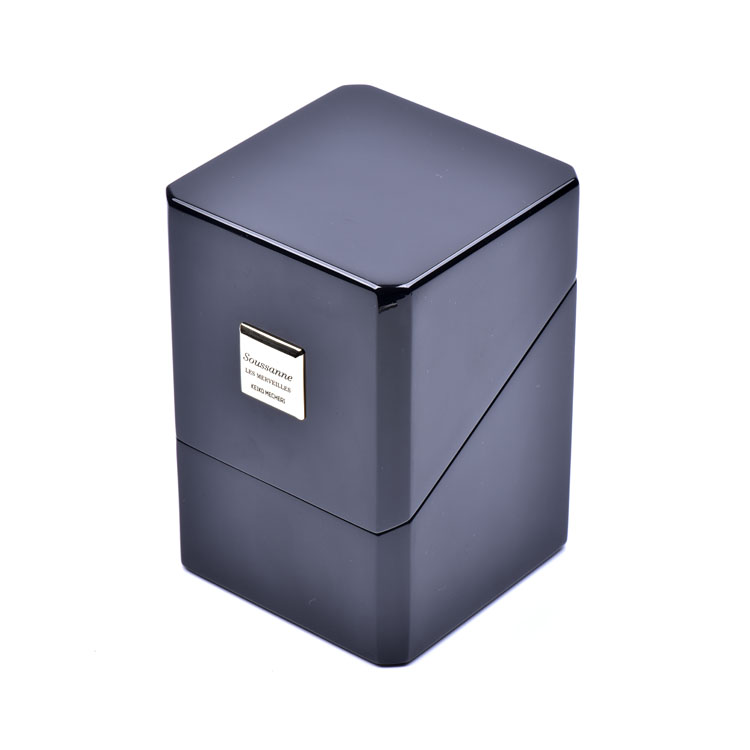
You must map scent families to specific visual elements. This manages buyer expectations perfectly. A woody fragrance demands deep, earthy color palettes. You might use textured kraft paper or rich mahogany tones. Floral scents pair beautifully with pastel shades and elegant, flowing typography. Aquatic fragrances require crisp whites, cool blues, and minimalist fonts. You create cognitive dissonance if a heavy, spicy oriental scent comes in a light, breezy box. Consumers feel confused when the visual cue fails to match the olfactory reality.
Tactile upgrades elevate the entire customer experience. Soft-touch coatings provide a velvety feel. This texture mimics the sensation of skin. Strategic embossing or debossing adds literal depth to your logo. High-contrast foil stamping catches the light beautifully on retail shelves. Gold and silver foils remain classic choices. However, holographic foils currently attract a younger demographic.
Common Mistake: Brands often apply too many finishing techniques simultaneously. They combine soft-touch, foil, embossing, and spot UV on a single surface. This dilutes the brand identity completely. It also inflates manufacturing costs unnecessarily. Choose one or two focal points to maintain a sophisticated look.
The physical construction of the box dictates the unboxing ritual. Two-piece rigid boxes offer a classic, frictionless opening experience. Magnetic closure boxes feel modern and satisfying. Folding cartons provide a cost-effective solution for entry-level price points. You must match the box structure to your target retail tier.
Box Style Selection Guide
Structure Type | Ideal Price Tier | Unboxing Experience | Key Advantage |
|---|---|---|---|
Folding Carton | Mass Market ($20 - $50) | Standard top-tuck opening | Highly cost-effective and ships flat |
Magnetic Closure Rigid | Prestige ($50 - $150) | Satisfying "snap" upon closing | High retention rate for post-purchase storage |
Two-Piece Rigid Box | Luxury ($150+) | Slow, vacuum-like reveal | Maximum structural integrity and heft |
Fragrance bottles feature heavy glass and delicate atomizer necks. The physics of protection matter immensely. You must ensure custom inserts properly cradle the bottle. They must absorb shock to prevent transit breakage. EVA foam offers premium protection and a smooth, luxurious finish. It holds complex bottle shapes perfectly. Molded pulp provides a slightly rougher texture but excels in eco-friendly lines. Die-cut paperboard inserts present a clean look for minimalist brands. The insert must grip the bottle tightly. You do not want the glass rattling inside the box.
Consumers demand genuine environmental responsibility today. Moving beyond simple greenwashing is non-negotiable. You should evaluate FSC-certified papers. These materials ensure responsible forestry practices. Soy-based inks replace petroleum-based alternatives nicely. They offer vibrant colors and easier recycling. Mono-material designs represent the gold standard for sustainability. A box made entirely of paperboard requires no separation before recycling. You can absolutely achieve a luxury feel using heavyweight recycled papers. Eco-friendly no longer means compromising on aesthetics.
You must navigate strict regulatory requirements globally. Alcohol-based scents classify as hazardous materials. You must display specific warnings on the outer packaging. Ingredient listings and batch codes take up valuable real estate. You need a skilled designer to integrate these elements smoothly. They must satisfy legal mandates without ruining the design aesthetic. Many brands utilize the bottom panel of the box for compliance text. This keeps the primary facing clean and visually striking.
The "blind" purchase dilemma plagues online fragrance sales. Customers cannot smell the product prior to purchase. Therefore, your digital imagery and physical delivery must work harder. You must reinforce the buying decision the moment the package arrives. Excellent Perfume Packaging Boxes bridge the gap between digital promise and physical reality.
Sensory staging structures the opening mechanism purposefully. You want to slow down the reveal to build anticipation.
The Outer Shipper: Use branded tape or a custom mailer box to set the tone immediately.
The Friction Unboxing: Design the lid to lift slowly. This builds suspense before revealing the bottle.
The Welcome Note: Include a textured card detailing the scent profile. This guides the customer's first impression of the fragrance.
Scented packaging presents an interesting opportunity. Incorporating olfactory marketing directly into the shipping box creates a memorable impact. You might use scented tissue paper or micro-encapsulated inks. However, this strategy carries distinct logistical risks. The scent must not overpower the actual perfume. It also requires careful storage to prevent the fragrance from degrading prematurely.
Drop-test realities dictate your structural engineering. Courier networks treat packages harshly. Your boxes must withstand rough handling while maintaining a pristine presentation upon arrival. We highly recommend testing your designs against ISTA standard drop protocols. A beautiful box loses all value if the glass shatters before reaching the customer.
Choosing the right manufacturing partner determines your success. Vendor evaluation criteria should go far beyond a simple price quote. You must look for specific technical capabilities.
First, evaluate their prototyping capabilities. A strong partner will provide rapid structural samples. Second, assess their color-matching consistency. Ask for case studies showing tight color control across multiple production runs. Third, review their structural engineering expertise. They should actively suggest insert modifications to improve bottle security.
Implementation timelines often surprise new brands. You need realistic schedules to avoid delayed launches. Custom dies require significant setup time. Bespoke materials might have lengthy supply chain delays. Multi-stage printing processes add days to the production cycle. Generally, allow at least eight to twelve weeks from final design approval to delivery. Rushing this process inevitably leads to costly printing errors.
Risk mitigation protects your investment. You should never commit to a full production run blindly. Always order physical prototypes first. Request a "white sample" to test the structural integrity and bottle fit. Once approved, demand a final color proof. This ensures your specific brand colors render correctly on the chosen paper stock. Finally, conduct rigorous transit testing yourself. Ship the prototype across the country using standard couriers. If it survives the journey intact, you are ready for mass production.
Successful fragrance presentation requires a careful synthesis of brand storytelling, structural engineering, and commercial viability. The box does much more than hold glass. It communicates your brand's core identity. It justifies your retail price point instantly. It serves as the ultimate defense against harsh shipping environments.
You must prioritize packaging upgrades based on your current brand bottlenecks. If your transit breakage rate remains high, focus immediately on structural integrity and better inserts. If your retail traction feels sluggish, invest in premium tactile finishes and color psychology. Targeted improvements yield the highest returns.
Take action today to audit your current packaging strategy. Request a material sample kit from a reputable vendor. Schedule a structural design consultation to physically test your bottle fit. Elevating your Perfume Packaging Boxes is the most direct path to elevating your entire brand.
A: Standard MOQs vary widely based on the manufacturing method. Digital printing runs for folding cartons can start as low as 500 units. Fully customized rigid boxes generally require an MOQ of 1,000 to 3,000 units. Higher volumes significantly reduce the per-unit cost.
A: Choose EVA foam for heavy luxury bottles requiring maximum impact protection and a premium, seamless look. Opt for die-cut paperboard if your primary goal is 100% recyclability. Paperboard works best for lighter bottles or brands heavily focused on minimalist sustainability.
A: Yes, eco-friendly packaging can easily achieve a luxury aesthetic. Advancements in premium molded pulp offer sophisticated textures. Heavyweight recycled papers accept foil stamping and embossing beautifully. By utilizing mono-material designs and FSC-certified stocks, you maintain high-end appeal without compromising environmental ethics.
A: The entire process typically spans 8 to 12 weeks. Structural design and physical prototyping take about 2 to 3 weeks. Finalizing color proofs adds another week. Mass production usually requires 4 to 6 weeks. Shipping and customs clearance will dictate the remaining timeline.
